






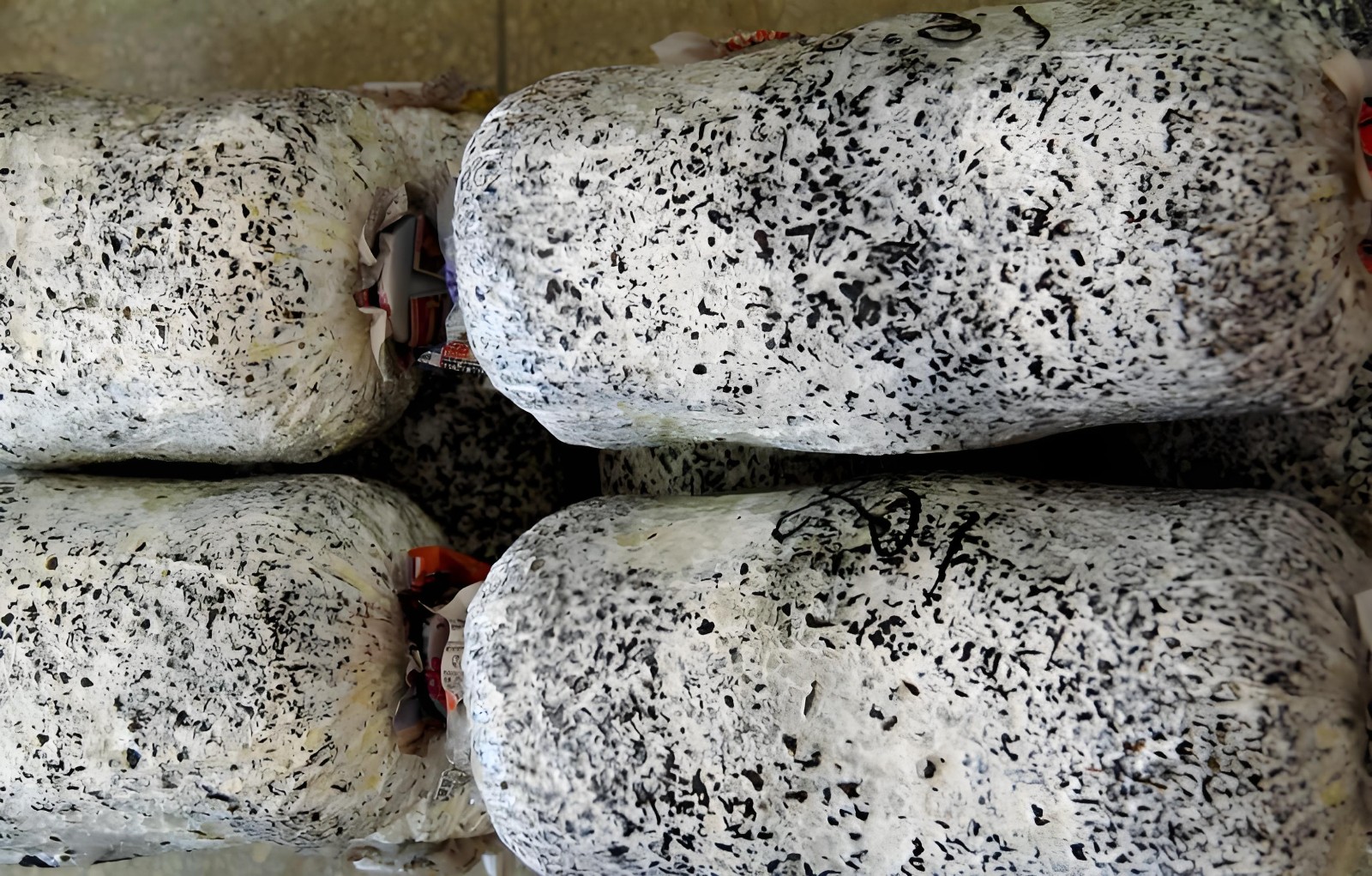
Oyster mushroom cultivation involves standardized bagging, inoculation and spawn run management, which directly affect mycelium health, contamination control and later fruiting performance.
1. Bagging and Inoculation
Polyethylene bags (45 cm × 22 cm, thickness 0.004 cm) are commonly adopted. Before use, punch 12 micro-perforations on each bag by sewing machine, arranged as 4 groups with 3 rows per group. Pre-tie one end of the bag and reserve a 1.5 cm tail. Wipe the outer surface of empty bags with 0.1% potassium permanganate solution before filling.
Break spawn into apricot-kernel-sized pieces in a disinfected basin. Overlarge spawn chunks easily age and form hard mycelial skin, hurting substrate quality; too fine spawn causes heavy mycelium damage and delays recovery. Break spawn only right before inoculation.
The standard inoculation rate is 15%–20% based on dry substrate weight: 20% for sawdust substrates, 15% for cottonseed hull or corncob substrates. The widely used four-layer inoculation method follows the ratio 3:2:2:3 (top : upper middle : lower middle : bottom). Place spawn close to bag edges and micro-perforations for faster colonization.
2. Mycelial Growth / Incubation Management
After inoculation, the bags enter the spawn-running stage. Temperature and ventilation are the core control points.
Substrate temperature controlKeep core temperature at 20–22°C. Rearrange stacks every 5–7 days: swap top/bottom and inner/outer bags, rotate bags to avoid water pooling at the bottom. Sharp temperature swings cause condensation and raise contamination risk.
Humidity & light controlMaintain air relative humidity 40%–50% to inhibit miscellaneous bacteria and stop excessive moisture loss. Keep the incubation room dim; strong light suppresses mycelial growth.
Stack turning & contaminated bag disposalMinor Mucor mold in the bag center can be left if oyster mushroom mycelium is vigorous enough to outcompete it. For waterlogged bags, punch the bottom with a needle to drain excess water. Light Trichoderma (green mold) contamination can be treated by injecting 1000× diluted 50% carbendazim wettable powder. Heavily contaminated bags must be taken out and burned immediately.
Post-full colonization managementOnce mycelium fully covers the substrate, untie the ties on both ends of the bags. Turn stacks regularly for heat dissipation and gently tap the mushroom logs to release stale air. After 7–10 days, mycelium thickens. When primordia emerge, the bags are ready to shift to the fruiting stage.


 Send Email
 WhatsApp
