






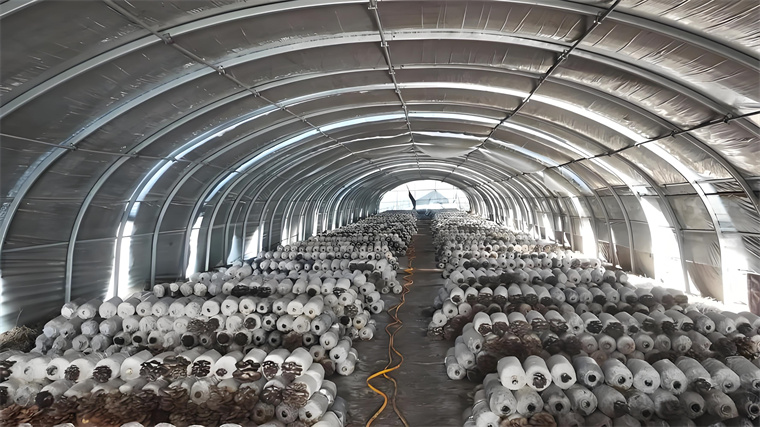
Raw substrate bag cultivation is the simplest and most cost-effective planting method for oyster mushrooms, widely adopted by mushroom growers. This cultivation mode features convenient operation and fast production cycles, yet it requires standardized technical management to control contamination. The complete workflow includes raw material preparation, substrate mixing, bagging, sterilization, inoculation, and mycelium running management. This article systematically introduces the pre-production core specifications of oyster mushroom raw substrate cultivation, laying a foundation for subsequent bagging and mycelium management (to be continued in Part 2).
1. Cultivation Site Selection & Disinfection
Long-term continuous cultivation on the same site will lead to the accumulation of miscellaneous bacteria and pests, significantly increasing contamination risks. Growers have long summarized the industry rule: "First year good, second year poor, third year unprofitable".
To ensure stable cultivation output, regular disinfection of mycelium running and fruiting areas is mandatory. Standard disinfection measures include ground treatment with lime powder, and full-site spraying with diluted pesticides: 1000-fold diluted 50% Carbendazim solution and 2000-fold diluted 80% DDVP emulsifiable concentrate. Professional practice proves that the continuous service life of a single cultivation site should not exceed 2 years; annual site replacement is the key to reducing diseases and contamination.
2. Optimal Spawn Bag Preparation Season
In northern China, the low-temperature periods of early spring (March–April) and late autumn (October–November) are the most suitable for spawn bag production. The mild low temperature in these seasons inhibits the reproduction of miscellaneous microorganisms and effectively reduces contamination rates, while still meeting the normal growth and mycelium running needs of oyster mushroom mycelium.
When the ambient temperature exceeds 25°C, miscellaneous bacteria multiply rapidly. Although oyster mushroom mycelium grows faster at high temperatures, the ultra-high contamination rate makes raw substrate cultivation difficult to succeed. Therefore, high-temperature seasons are not suitable for spawn bag preparation.
3. Raw Materials & Scientific Cultivation Formulas
The selection of raw materials directly determines the mycelium growth state and final yield. Each material has independent functional characteristics, and standardized formulas are formulated for raw substrate cultivation:
3.1 Material Characteristics
Cottonseed hull: The preferred core substrate, with reasonable C/N ratio, rich nutrients and weak alkalinity, which maximizes the cultivation success rate.
Corn cob: High-quality alternative substrate. Only fresh and mold-free corn cobs are available, which need to be crushed to soybean size before use.
Sawdust: Not recommended for raw substrate cultivation, due to unreasonable C/N ratio and difficult-to-decompose nutritional structure.
Wheat bran & corn flour: Supplementary nitrogen and carbon sources. Wheat bran improves nutrient absorption; corn flour enhances mycelial vigor. The dosage should be reduced in hot seasons to avoid microbial contamination.
Gypsum & superphosphate: Supply sulfur, calcium and other essential nutrients, improve substrate water retention and air permeability, and prevent acidic fermentation.
Lime: Adjust substrate alkalinity, inhibit miscellaneous bacteria, neutralize organic acids produced by mycelial metabolism, and increase yield.
3.2 Classic Cultivation Formulas
To adapt to the anti-contamination demand of raw substrate cultivation, appropriately increase alkalinity materials, and adopt the two mature formulas below:
Formula 1 (Cottonseed Hull Based): Cottonseed hull 96%, Lime 2%, Gypsum 1%, Calcium superphosphate 1%
Formula 2 (Corn Cob Based): Crushed corn cob 82%, Wheat bran 13%, Lime 3%, Gypsum 1%, Calcium superphosphate 1%
4. High-Quality Spawn Selection Criteria
Raw substrate cultivation has high requirements for spawn activity. Aged, degraded, defective or contaminated spawns are strictly prohibited. Qualified spawns must be vigorous and pure. Any spawn with thick surface mycelium skin, sparse mycelium growth, premature fruiting bodies, insect eggs or miscellaneous bacteria contamination must be eliminated to avoid large-area cultivation failure.
5. Standard Substrate Mixing & Pile Formation
The mixing site requires rainproof, sunshade and concrete ground conditions. The core mixing standard is "two uniformities and one sufficiency": uniform mixing of main and auxiliary materials, uniform water distribution, and sufficient material water absorption.
After mixing, the substrate must meet standard physical and chemical indicators: moisture content 60%–65% (hand-squeezed water seepage without dripping), pH value 9–10. Note: Carbendazim and lime shall be added separately to avoid reduced fungicide efficacy.
A secondary turning and re-piling is required before bagging to prevent oxygen deficiency inside the substrate, which can cause slow spawn germination. Subsequent bagging operation and post-production mycelium running management will be explained in detail in Part 2.


 Send Email
 WhatsApp