






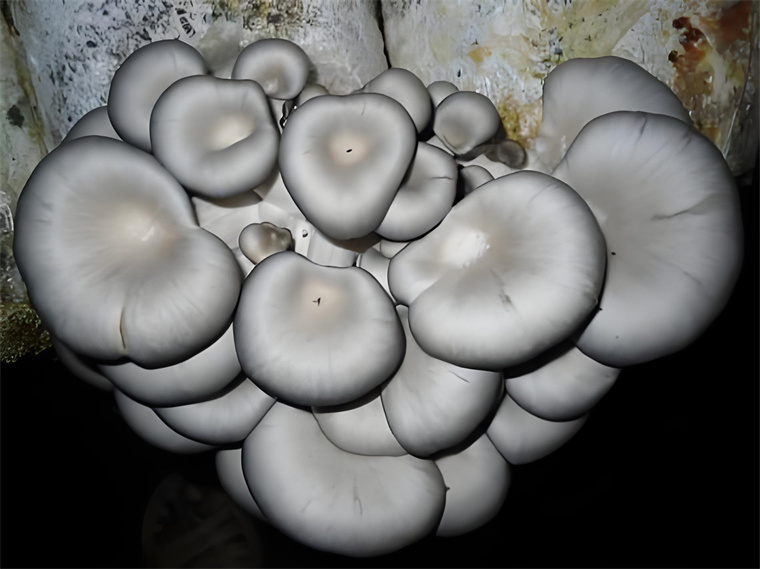
1. Overall Production Process
The standardized production flow of oyster mushroom fermentation substrate cultivation bags follows five core steps: substrate selection → substrate preparation → composting and fermentation → bag packing and sowing → mycelium growth control.
2. Site Selection & Production Season
The ideal composting site is a windproof, sunny concrete floor adjacent to the mushroom house, with clean water access and good drainage. A compost pile area of 45 m² is required per 100 m² of cultivation area. Thoroughly disinfect the site and tools before composting, and sun-expose all raw materials for 24 hours.
The optimal natural production period is August to November, with prime sowing time from September to October. Sowing in hot summer is not recommended due to low survival rates caused by high temperatures.
3. Raw Material Formulas & Preparation Rules
Two practical substrate formulas are adopted for production:
Formula 1: 40% cottonseed hulls, 45% corn cobs, 10% wheat bran, 0.5% superphosphate, 0.5% gypsum powder, 0.5% urea, 0.5% sucrose, 3% lime.
Formula 2: 80% corn cobs, 15% wheat bran, 0.5% superphosphate, 0.5% gypsum powder, 0.5% urea, 0.5% sucrose, 3% lime.
Key preparation specifications: Wheat bran content ≤15% in hot seasons; lime dosage 2%–4%; urea dosage ≤0.5%; gypsum and superphosphate each ≤1%.
4. Composting Operation
Pre-wet coarse-grained corn cobs one day before pile building to reach 60% moisture, avoiding insufficient water and nutrient loss during fermentation. Mix all main and auxiliary materials evenly with water and chemicals to meet three uniformity standards and two core indicators: 65%–70% moisture content and pH 10.
Build a north-south oriented compost pile with seasonal adjustable specifications: 1.5–1.8 m in height and 2–2.5 m in width (higher/wider in cold seasons, lower/narrower in hot seasons). Shape the pile with steep sides and a turtle-back top for full fermentation. Drill plum-blossom-shaped ventilation holes (5 cm diameter, 0.5 m spacing) on the top and sides for air permeability.
After piling, spray the surface with diluted 80% carbendazim (500-fold) and 50% dichlorvos (1000-fold) for pest and disease prevention. Cover with straw mats for moisture retention and plastic film for rain protection (remove film promptly after rain to avoid anaerobic fermentation). Ferment in a shed during low-temperature or rainy weather.
5. Pile Turning Management
5.1 Purpose & Principle
A chimney effect forms 24 hours after piling, causing extreme temperature and moisture differences between the pile’s inner and outer layers. Regular pile turning mixes layered substrates, exchanges cooling, aerobic and anaerobic fermentation zones, exhausts waste gas, adjusts substrate moisture and pH, supplements materials, and improves oxygen supply. This boosts microbial activity, accelerates substrate decomposition, and ensures uniform fermentation maturation.
5.2 Fermentation Layer Characteristics
The compost pile has four distinct fermentation layers from outside to inside: ① Outer cooling zone (7–15 cm thick, ~35°C, dry and ventilated); ② Actinomycete active zone (~50°C, with white actinomycetes); ③ Optimal fermentation zone (70–80°C, intense chemical reactions, best fermentation effect); ④ Anaerobic fermentation zone (20–30°C, humid and oxygen-deficient, produces ammonia odor, unsuitable for mycelium growth).
5.3 Turning Time & Method
The first turning is conducted 48–72 hours after piling, or when the substrate temperature 33.3 cm below the surface stabilizes at 65–70°C for 24 hours. Loosen and flip the substrate thoroughly (top to bottom, bottom to top) for even fermentation. The whole fermentation cycle lasts 6–10 days: turn every 1–2 days in hot seasons and every 2–3 days in cold seasons, with 3 times of turning in total.
5.4 Fermentation Quality Standards
Qualified fermented compost features visible white actinomycetes, soft and elastic texture, light brown color, and fragrant odor (no peculiar smell). Standard indicators: 65% moisture content, pH 6.5–7.0.
6. Post-Fermentation Seasoning
Spread the fermented compost to dissipate heat completely. Spray evenly with diluted 50% carbendazim (1000-fold) and insecticide. Adjust overly acidic substrate with 0.5% lime solution to a weak alkaline state. After seasoning, the substrate is ready for bag packing and sowing when the temperature drops below 25°C and waste gas is fully exhausted.


 Send Email
 WhatsApp